Sourdough Journal · Lievito madre build log

The Grape Madre

A panettone-grade lievito madre, coaxed from ripe grapes, honey, and water, then recovered onto Caputo Manitoba Oro, an unmalted high-protein flour built to hold through a long fermentation. The build log, and the placard that bides by the crock. Slàinte mhath, and may she outlast the winter.

Origin: Wild yeast, grape bloom
Environment: 80°F insulated + seed pad
Target flour: Caputo Manitoba Oro, ~14.5% protein
Jump to the build journal

Why start with grapes

Ripe, unwashed grape skins carry their own wild yeast in the bloom, that dusty film you'd scrub off without a second thought. Crush them with honey and water and the wee beasties wake quick, giving the culture a head start no bought packet can touch. Mistake it not for sentiment, mind. It is the oldest working method there is, and it costs nowt.

The flour road matters as much as the start. Fresh-milled soft white wheat brings the bran and germ that feed the culture through its most fragile days, when survival is the only game in town. Once she is established, the madre is walked onto Caputo Manitoba Oro, an unmalted high-protein flour strong enough to hold the open, laminated crumb a proper panettone demands. Take her gentle over the pass and she'll no mind the change.

The Build, in Four Phases

Phase 1 · Inoculum

Wake the grape yeast

Very ripe, unwashed grapes crushed with the skins split, mixed with 100ml room-temp water and a tablespoon of honey. Left at 80°F for an hour or twa until the first faint bubbles show, then strained. That liquid is your inoculum, and that is the whole of it.

Phase 2 · Establish

Days 1–3, fresh-milled soft white

The inoculum is built into a stiff 50% hydration paste with fresh-milled soft white wheat, whole grain, bran and germ intact, feeding the culture through its most fragile days. Gluten strength is neither here nor there yet. Survival is the only tune.

Phase 3 · Transition

Days 4–5, the flour handoff

A 50/50 blend of soft white and Caputo Manitoba Oro over two feeds eases her onto the unmalted high-protein flour without a shock. If the dough is stubborn and tight, nudge hydration to 55% and bide a wee till it settles.

Phase 4 · Maintain

Day 6 onward, 100% Manitoba Oro

Full-strength flour, 50% stiff hydration, fed twice a day. She is ready when she doubles fair and square in 4 to 6 hours at 80°F for three feeds running, smells clean and a wee bit drunk, and a pinch floats. No refrigeration till she has held that rhythm a full seven days. Patience is a virtue, and a sourdough is no different.

Holding 80°F

An insulated box with a seed-warming pad holds the heat through the night, which is exactly when a young culture throws in the towel. But those boxes trap heat like a bothy, and a cheap pad will creep past 90°F while you are asleep. A thermometer for the first day is nae optional. It is the difference between a living culture and a cooked one.

Reading the signs

  • Hooch or collapse before the next feed, too hot. Crack the lid and take her gentle.
  • Pink or orange fur, mold. Away wi' it, start fresh.
  • No rise by Day 5, too cold, or the water was chlorinated to death.
  • Rotten or sulfur reek, a bad batch. Begin again, and clean.

Build Journal

The Grape Madre

A lievito madre is nae new thing. Italian bakers have kept these wee cultures alive for centuries, handed down house to house, refreshed morn and night, held at steady warmth in ceramic crocks. The tradition is older than commercial yeast by hundreds of years. It is wild yeast from grain and air, fed flour and water till it is steady enough to lift a panettone. Slàinte math, and may she see many a bake.

This build starts with grapes. Unwashed skins carry their own yeast in the bloom, and that microbe, coaxed awake with honey and a bit of time, becomes the inoculum. From there she walks the flour road, rises on schedule, and settles into the twice-daily rhythm that keeps her breathing. More by luck than judgement, the first try took.

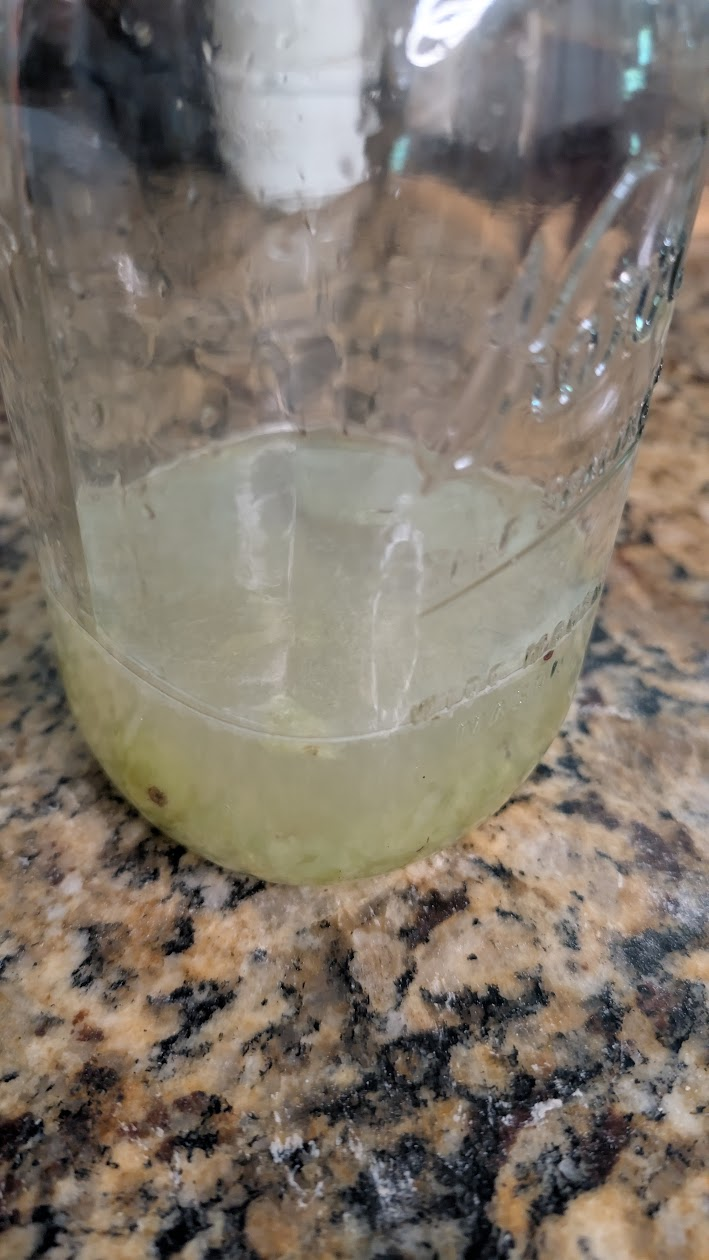
Grape must inoculum in a mason jar, yeast sediment settled at the bottom

Entry 1 · Monday, July 20

Inoculum

Grape must, started. Very ripe, unwashed grapes crushed with honey and water, rested at 80°F till the first faint bubbles showed, then strained. The liquid is the inoculum: wild grape yeast, nae bought culture. The jar shows the settled lees at the bottom and the cloudy yellow-green must above. A fine start to her.

Decorative sketch of honeycomb, honey jar, and ripe grapes
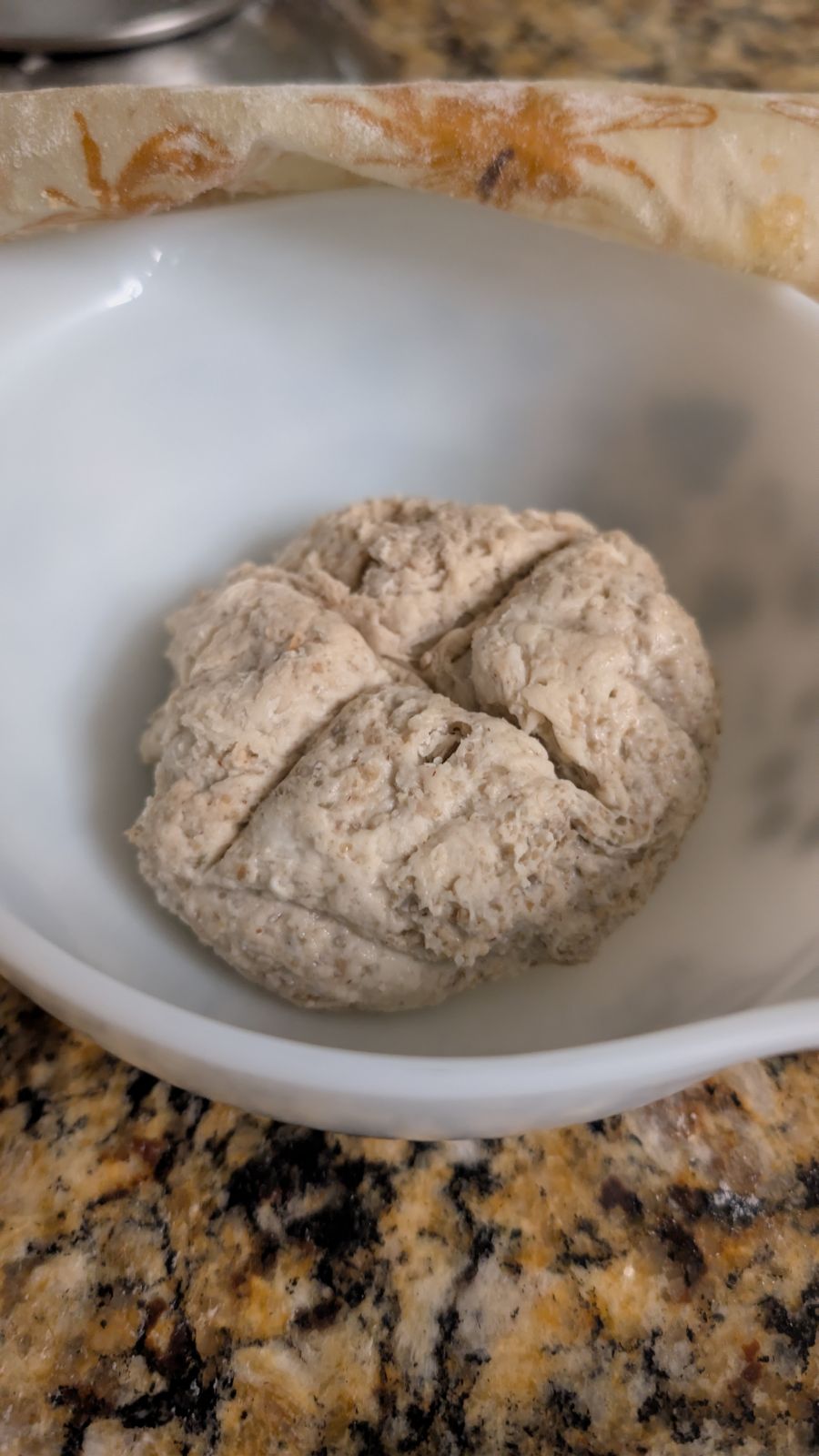
First feed of the grape-must dough, cross-scored in a white bowl

Entry 2 · Wednesday, July 22

First feeding

First feed off the must. The inoculum is now flour and water, turned to dough. She is small, young, and fragile yet. Discard is a luxury we can ill afford, so all of it goes to the next feed, building strength by repetition.

The dough is alive and lifting. The cross-score opens clean, a good sign the fermentation is underway and the gluten is learning to hold its gas.

Feed: 1:1:2 (rye, whole wheat, Sir Lancelot). 55% stiff hydration. No discard at this stage. She is too wee and sparse to waste a crumb.

Decorative sketch of wheat stalks bundled with burlap cloth
Lievito madre doubled and collapsing 4 hours after feeding

Entry 3 · Wednesday, July 22

Doubled and collapsing

Four hours after the last feed she had doubled and was just beginning to slump. That is the rhythm you are after. A healthy culture on a twice-daily schedule peaks between four and six hours, then the dome softens and the top starts to sink. That is the call to feed, not a failure. The best laid schemes, and all that, but here it went to plan.

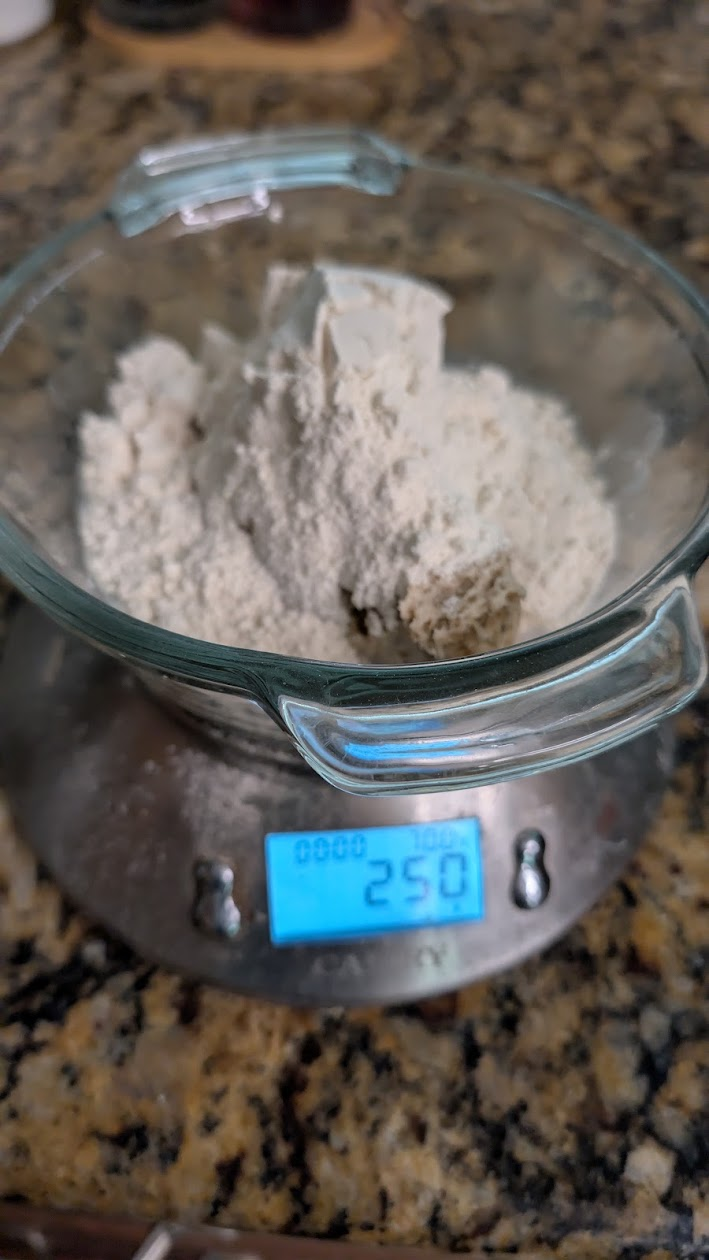
Took 100g of the madre, fed with 100g Sir Lancelot and 50g water. Plain as day: equal weight flour and starter, water at half the flour weight, a stiff 50% dough that holds its shape after a short knead.

Digital scale reading 250g: 100g madre, 100g flour, 50g water
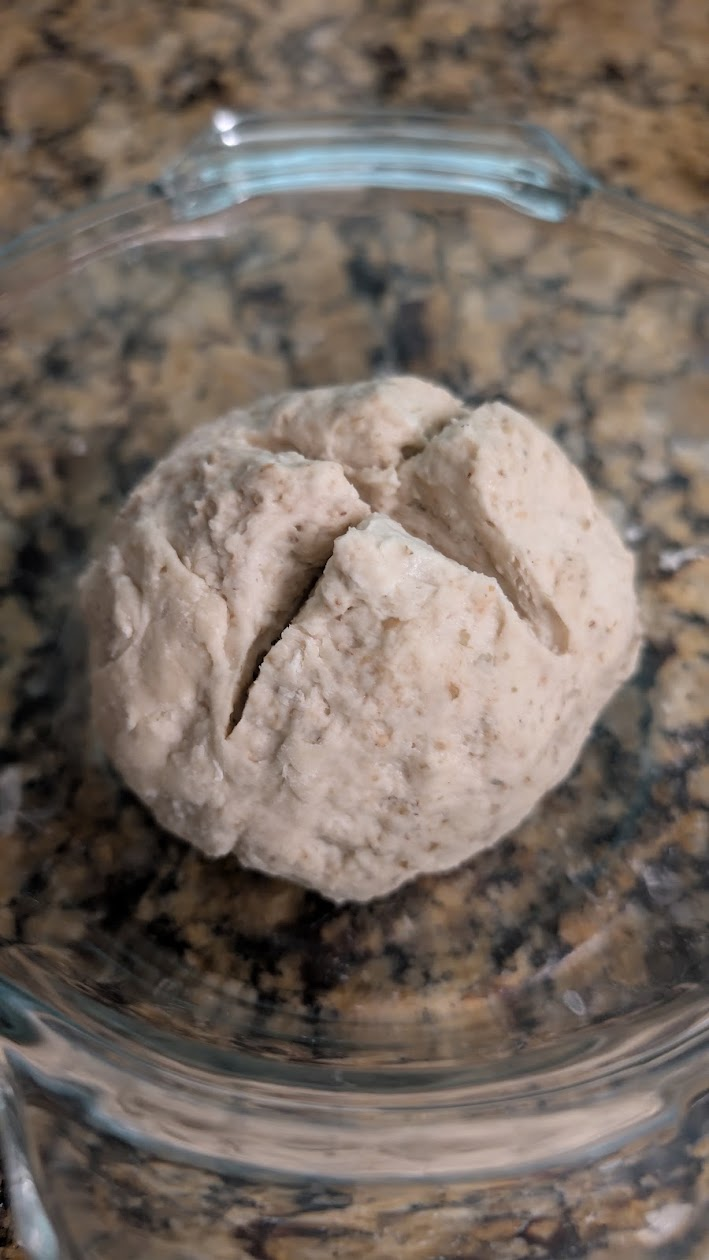
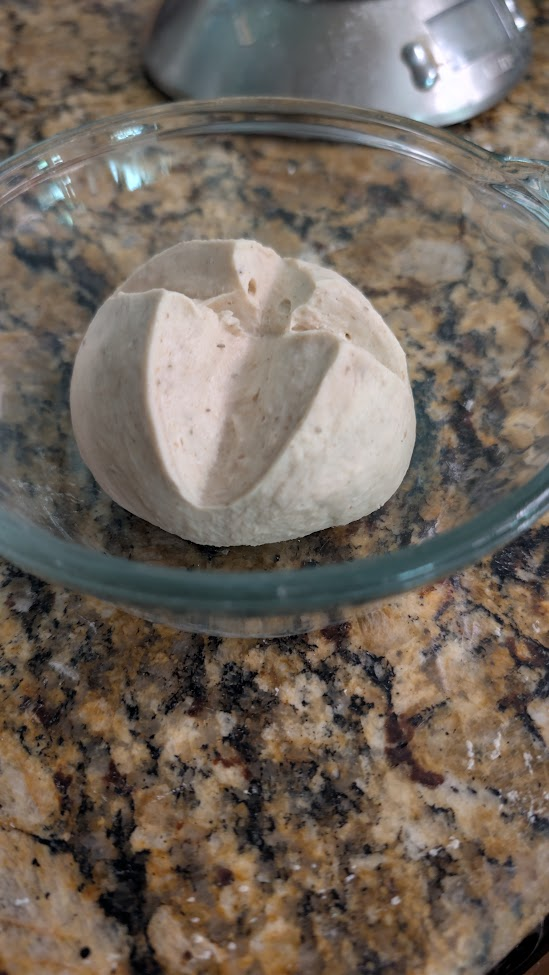
Scored dough after kneading, reset to ferment
Lievito madre holding shape well after kneading, cross-score visible

Entry 4 · Wednesday, July 22

Holding shape

By 4pm she had doubled again. The rhythm is locked now: four hours feed to peak, then feed and reset. She is becoming reliable, consistent. The dough holds its shape after a knead, the gluten net tight enough to trap the gas and keep her from folding under her own weight.

The cross-score is clean and deep. That is what strength looks like. Fed 100g Sir Lancelot and 50ml water, kneaded brief, set back. Four more hours to the next peak, the next feed, the next turn of the wheel.

Decorative sketch of an analog clock and thermometer
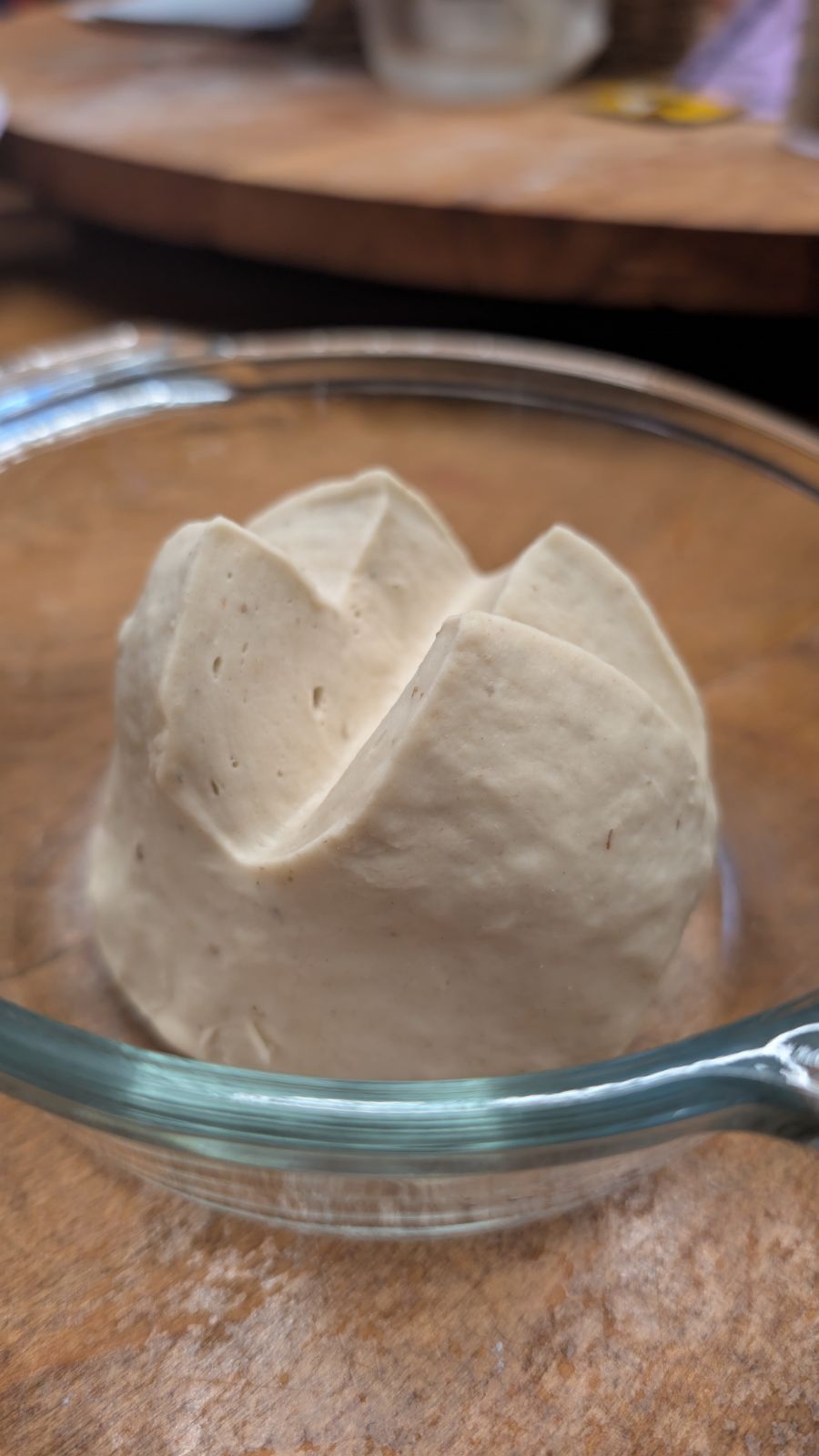
Madre after 8pm feed, doubled with cross-score gaping open, glass bowl on wooden counter

Entry 5 · Wednesday, July 22

8pm feed, room temp overnight

Fed at 8pm, 100g madre to 100g Sir Lancelot and 50g water. She doubled clean as a whistle: dome held, cross-score gaping, gluten tight and elastic with nae sagging.

Dropping the high-heat overnight plan. Instead of the 80°F seed-pad from the establishment days, she rides at room temperature tonight. The aim is 65 to 70°F for a slower 10 to 12 hour turn, not the 4 to 6 hour sprint at 80°F. That should bring the peak round about 8am. Take her gentle through the gloaming.

The twice-daily maintenance rhythm is underway. She is strong enough now that refinement beats raw speed. Whits fur ye'll no go by.

Decorative sketch of an analog clock and thermometer
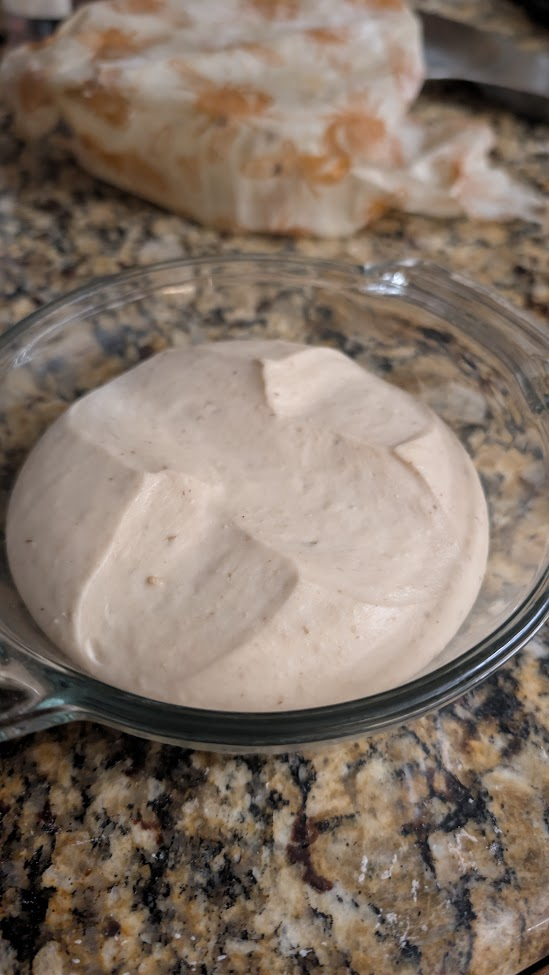
Madre after overnight ferment at 70F, doubled and domed in glass bowl on granite counter

Entry 6 · Thursday, July 23

5:30am, overnight at 70°F

Room temperature held fair at 70°F through the night. Come morning she had doubled clean: dome round and full, surface smooth with nae hooch, nae sag, nae acid pooling. Exactly what a 10-hour turn at 70°F should yield.

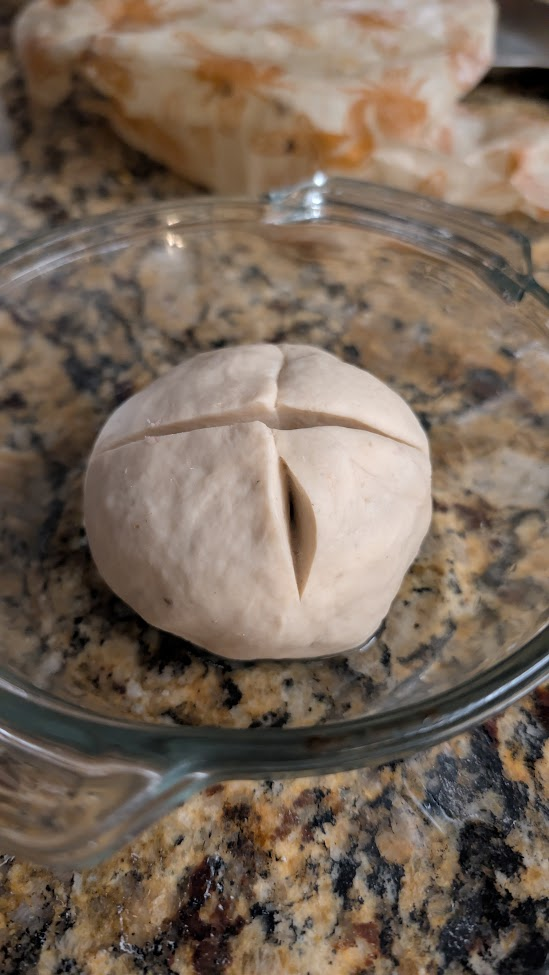
Fed at 5:30am: 100g madre, 100g Sir Lancelot, 50g distilled water. Same 1:1:1, same 50% stiff hydration. She has settled into the rhythm now: feed, peak, feed, peak. No drama, no fuss.

The cross-score opened clean after the knead, gluten holding gas without tearing. That is maintenance for ye. Slàinte math, and may she see many a bake.

Madre after 5:30am feed, cross-scored and domed in glass bowl
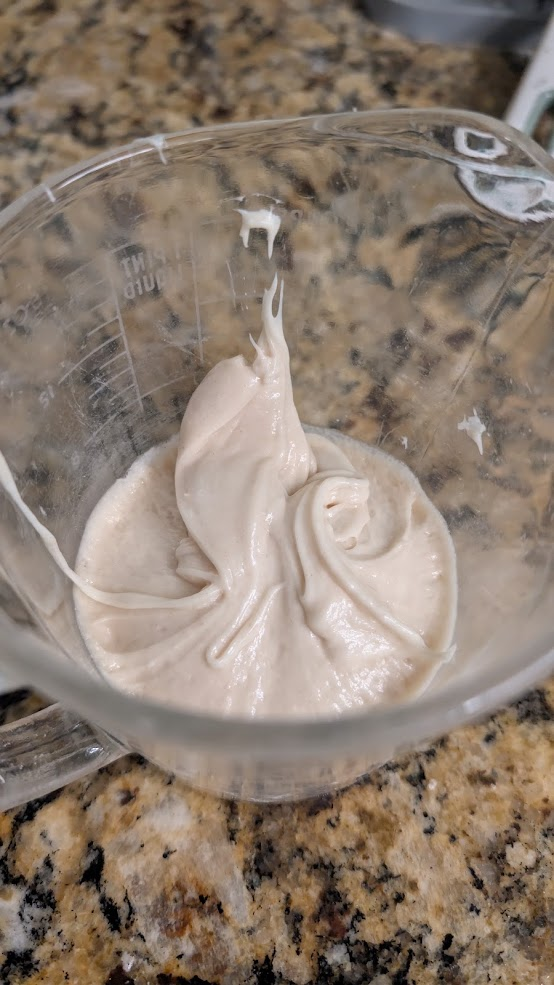
Lievito madre reduced to a sticky, glue-like paste in a glass measuring cup

Entry 7 · Wednesday, July 29

The enzyme wars

By morning, the madre had lost the argument. A stiff dough that held its shape at bedtime had become a pale, elastic glue in the measuring cup. Not too much water. Not a careless knead. The flour itself had turned traitor.

There is an enzyme war hiding in nearly every bag on the grocery shelf. Malted barley flour, or another added enzyme, is put there to help commercial yeast perform in a same-day loaf. In a long-fermented lievito madre, the same machinery keeps cutting starch after the culture has eaten its fill. The gluten matrix weakens, the dough slackens, and overnight the proud little madre becomes wallpaper paste with ambitions.

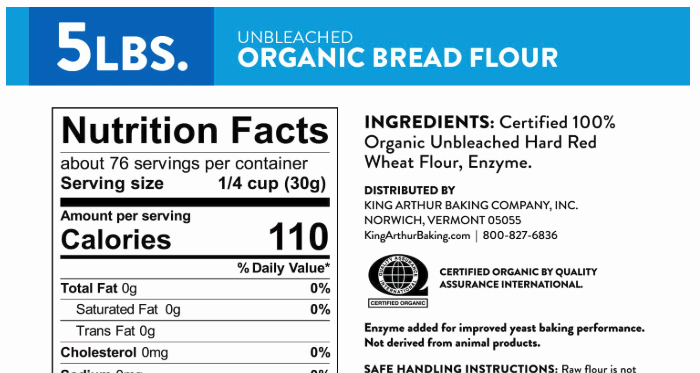
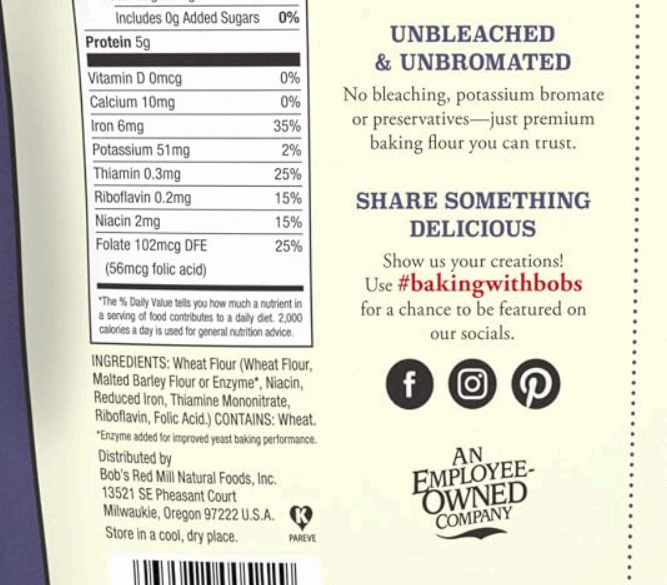
The labels make the betrayal plain. King Arthur Organic Bread Flour lists “enzyme.” Bob's Red Mill lists malted barley flour or enzyme. Unbleached does not mean enzyme-free. Organic does not mean suitable for a madre. High protein does not save a flour whose enzymes are dismantling the structure underneath it. The problem is not the baker's hands. It is the bag.

The remedy is not to chase the glue with more flour. Change the flour. The next feed moves to unmalted, high-protein flour, because the madre deserves a chance to ferment without being quietly dismantled from within. A simple culture, defeated by a helpful ingredient. There is a lesson in that, though I would have preferred the lesson before wasting the flour.

King Arthur Organic Bread Flour label listing enzyme as an ingredient
Bob's Red Mill flour label listing malted barley flour or enzyme
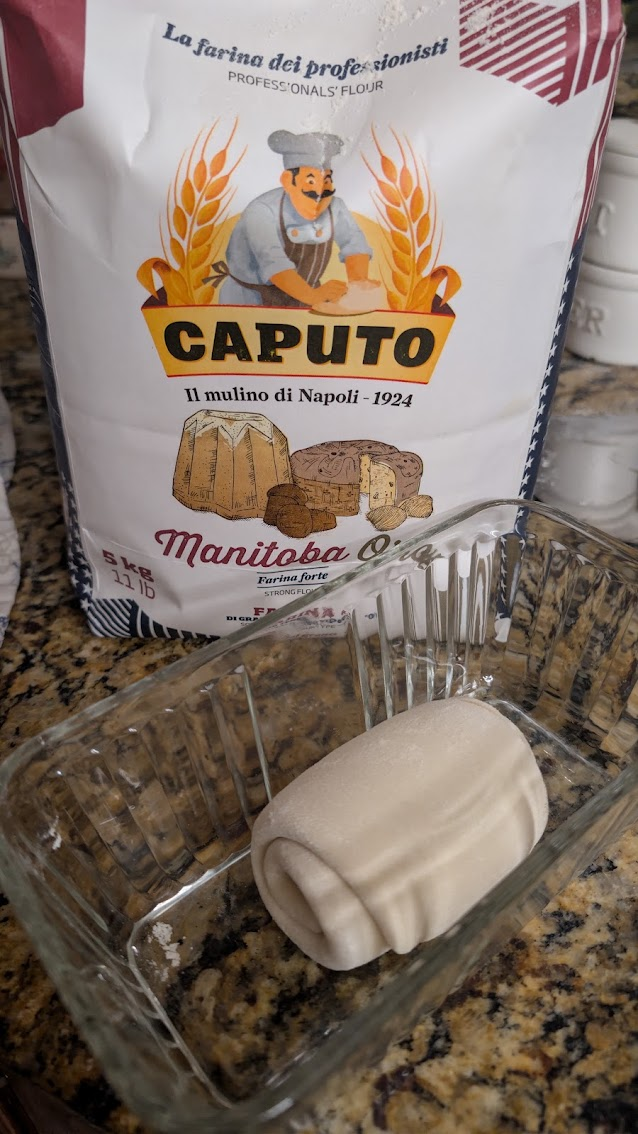
Fresh lievito madre dough in a glass dish with a bag of Caputo Manitoba Oro flour behind it

Entry 8 · Thursday, July 30

A flour worth trusting

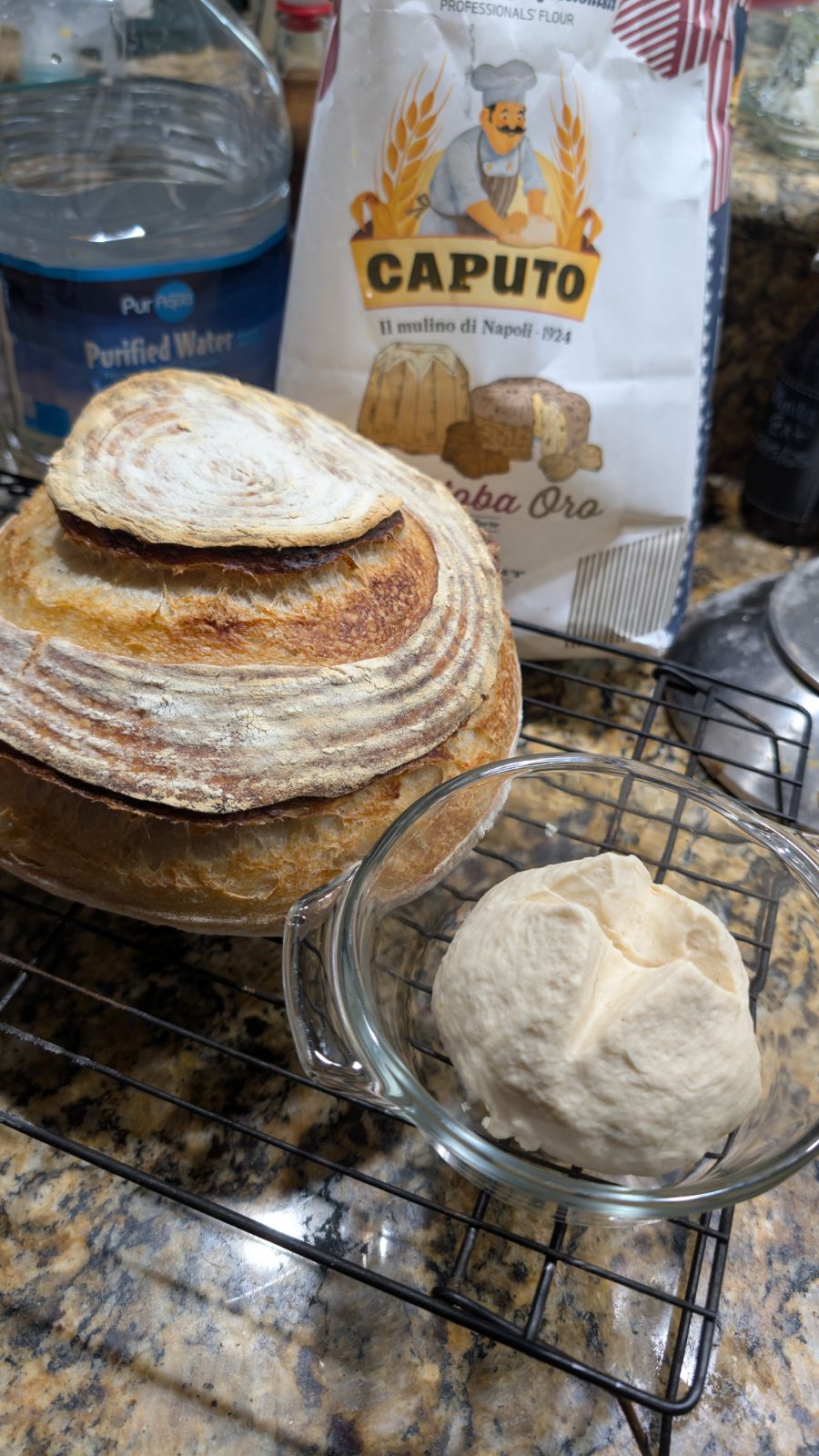
At last, the right flour has crossed the water. Caputo Manitoba Oro, imported from Italy, strong enough for the work and free of the added enzymes that turned the last madre to glue. The bag stood on the counter like a small flag of liberation. Five kilograms of hope, which is rather more dignified than five kilograms of wallpaper paste.

The difference begins with the label. No malted barley flour. No vague “enzyme” tucked into the ingredients. Just a professional strong flour from Naples, made for doughs that must endure time without surrendering their structure. The protein gives the madre a frame. The absence of added enzymes lets that frame remain standing.

So the old culture has been fed again. A small portion of the ruined madre went into fresh Manitoba Oro, with measured water and a proper stiff knead. The dough came together cleanly, smooth beneath the hand, firm enough to hold its shape and willing to be scored. It is early yet, and a single good mix proves nothing, but after the overnight betrayal even basic structural integrity feels like a public holiday.

Now we wait. The culture must prove itself across the cycle: rise, dome, hold, and return without dissolving into paste. This is not sentimentality. It is controlled fermentation, sound flour, and the quiet pleasure of removing the saboteur from the room. Still, there is something grand about beginning again with a flour brought from Italy for the very purpose of carrying a madre toward panettone. Whits fur ye'll no go by. The road has turned uphill again, but it is at least a road.

Fresh lievito madre restart after an eight-hour ferment, scored in a glass measuring cup

Entry 9 · Saturday, August 15

Complete restart

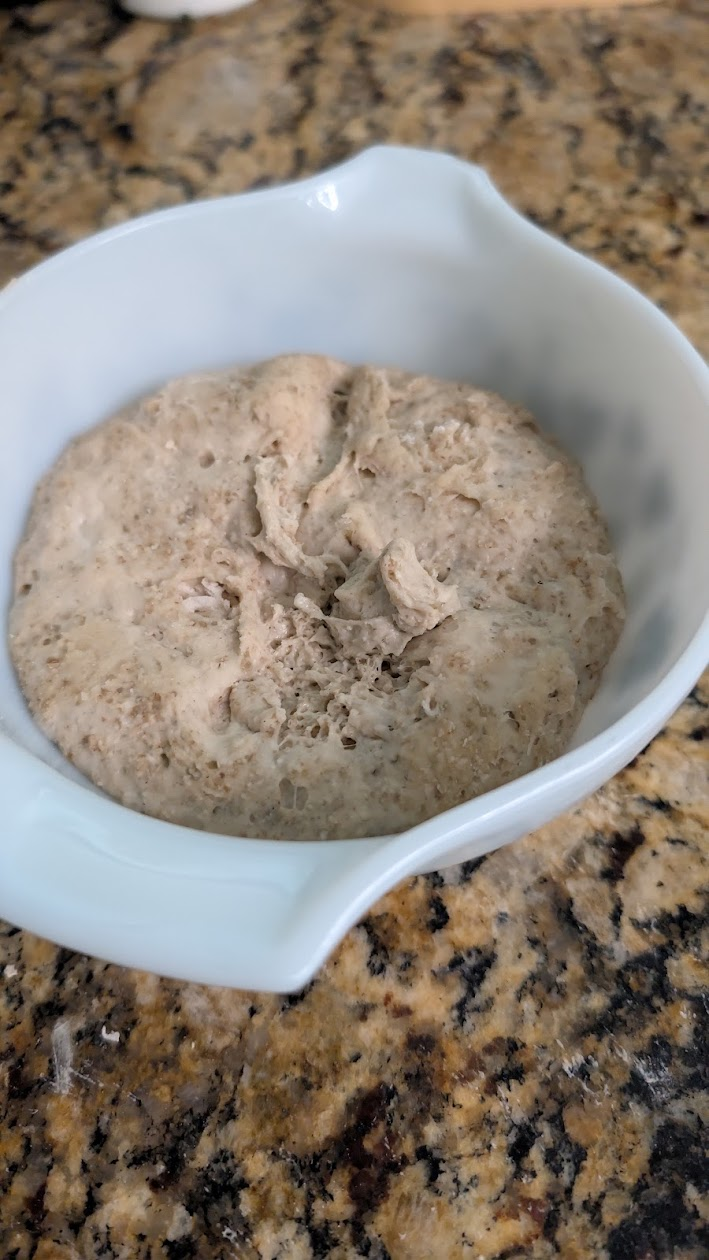
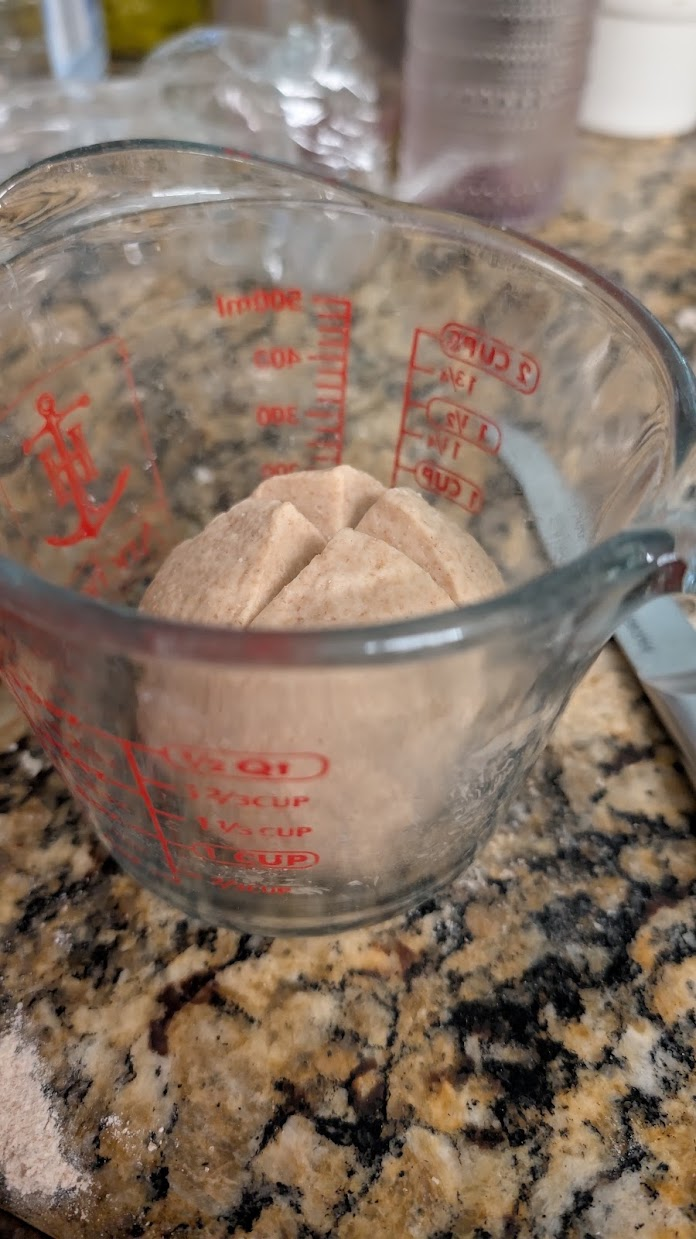
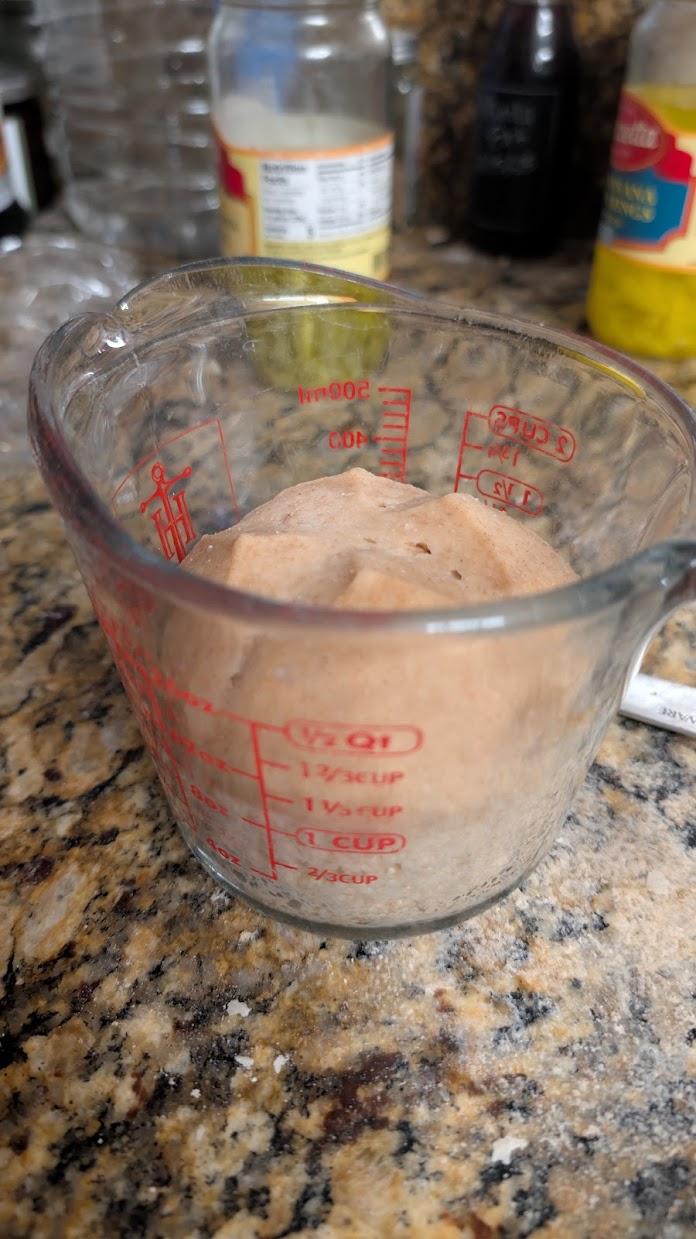
The old culture is finished. This is a complete restart from scratch, eight hours into the first ferment. The dough is a smooth, light-tan ball in a glass measuring cup, with a clean shine and three cuts opening across the crown.

At this stage the useful evidence is structural, not sentimental: the ball remains cohesive and has not visibly collapsed. The starting level, aroma, temperature, and texture will decide what happens next.

This is the third feeding of the restart: 100g starter, 100g flour, and 50g water. The flour is 25% freshly ground hard red wheat (25g) and 75% Caputo (75g), for a 250g total dough at 50% hydration.

Close-up of the restarted lievito madre in a glass measuring cup Restarted lievito madre shown in context on the kitchen counter
Freshly baked sourdough boule with decorative scoring on a cooling rack

Entry 10 · Tuesday, August 18

First successful boule

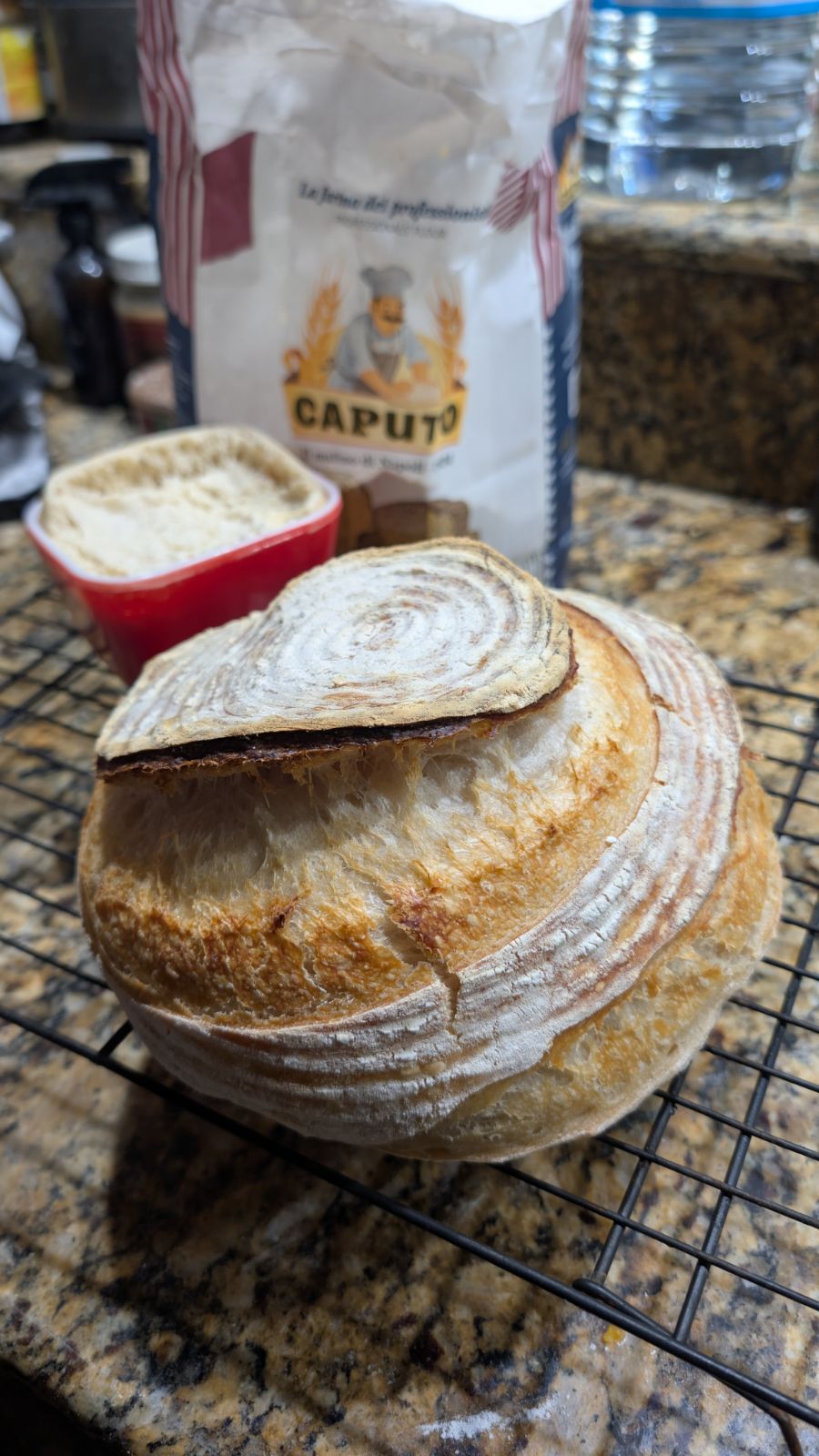
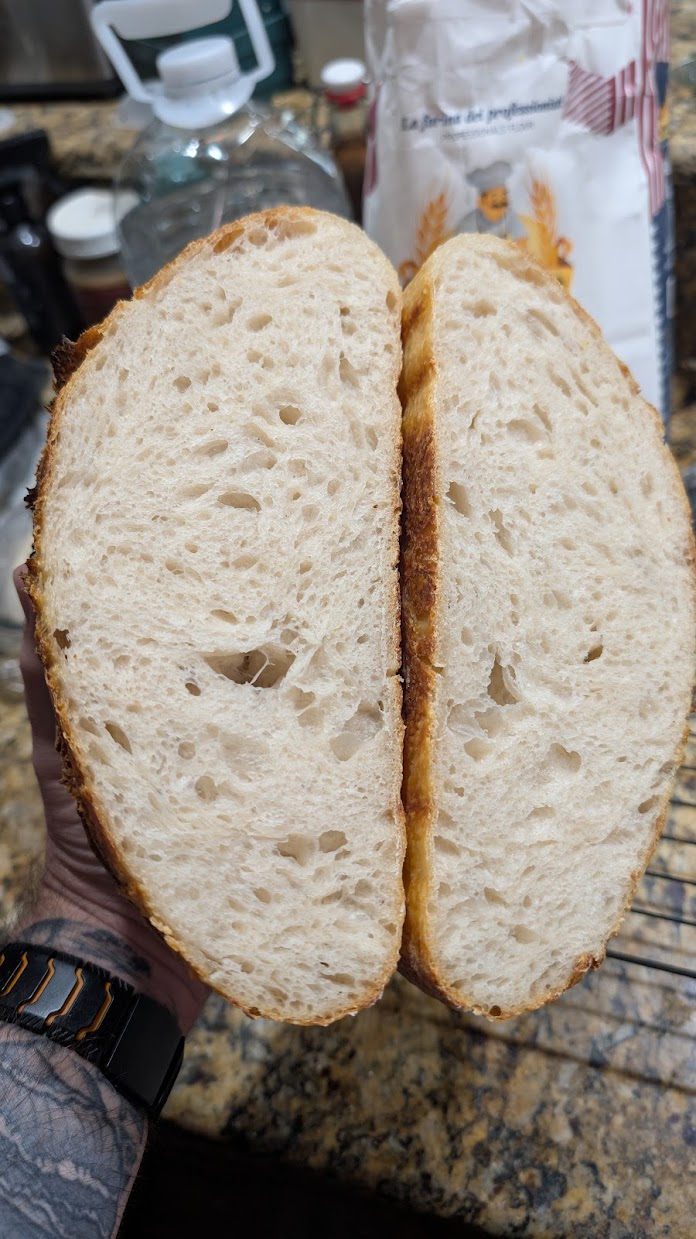
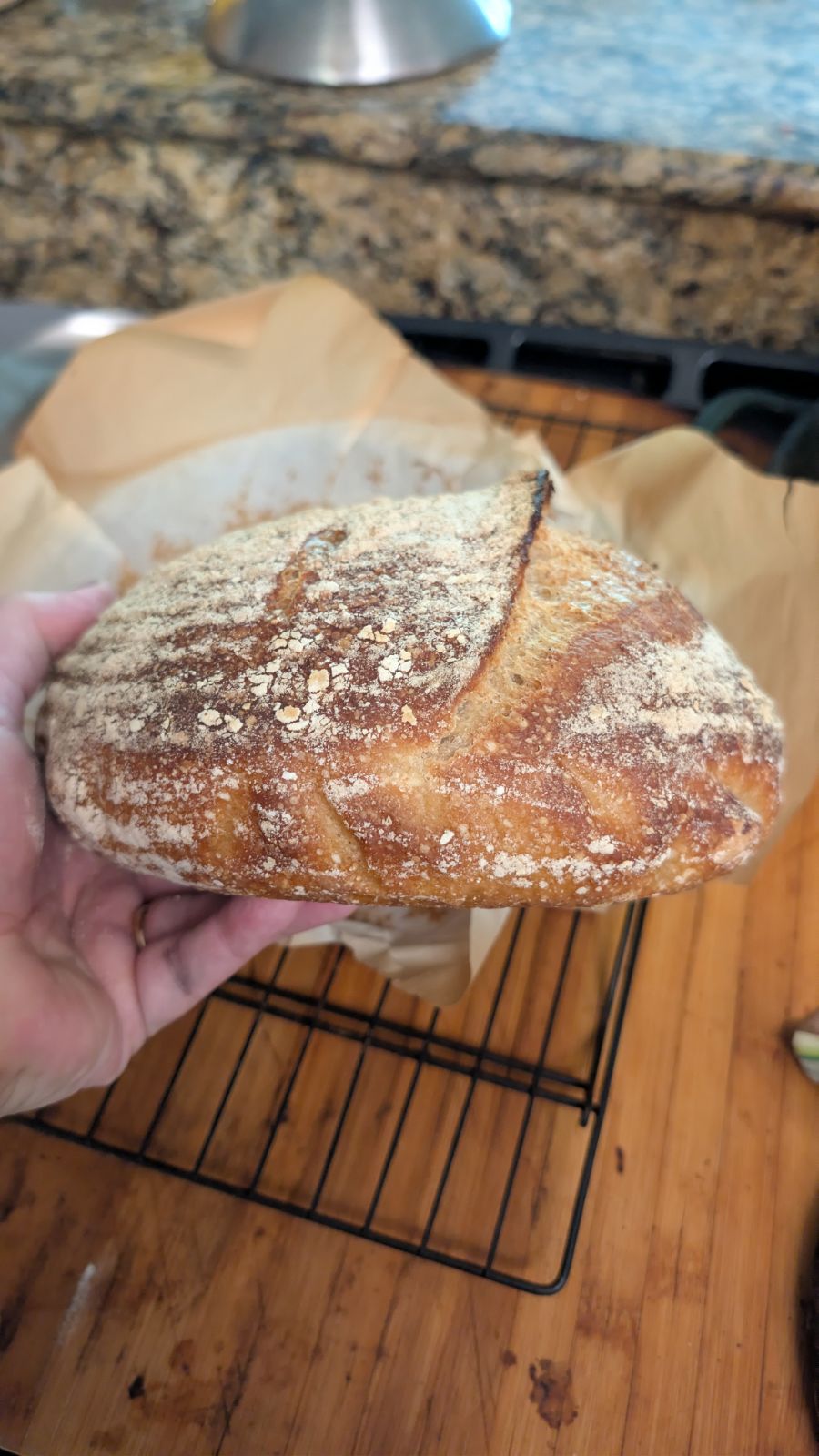
The restart has earned its first proper result: a baked boule with a deep golden crust, a strong ear, and clean decorative scoring. The loaf is cooling on the rack beside the Caputo flour that carried the culture through the rebuild.

The photographs show a sound bake, not merely an active starter. The loaf holds its shape, the crust has taken colour, and the scoring opened with definition. The crumb will be the final verdict once it is cut.

After the failed flour and the complete restart, this is the first clear success. The bake used 1,000g Caputo Manitoba Oro, 700g water at 90°F, 150g lievito madre, and 20g salt. That is 70% base hydration, or about 68.2% overall if the madre is counted at its 50% maintenance hydration. The salt is 2% of the base flour.

Bulk fermented, then shaped into bannetons and refrigerated overnight. The dough spent one hour on the counter while the oven heated. It baked in a cast iron cloche at 450°F: 30 minutes covered, then 15 minutes uncovered to build color. Total bake time was 45 minutes. A loaf worth continuing.

Golden sourdough boule with decorative scoring on a black cooling rack Close view of the sourdough boule showing its ear and scored crust Sliced sourdough boule showing an open, airy crumb and crisp crust
Freshly baked sourdough boule with a deeply golden crust on a cooling rack

Entry 11 · Tuesday, September 8

Rye, whole wheat, and a long cold ferment

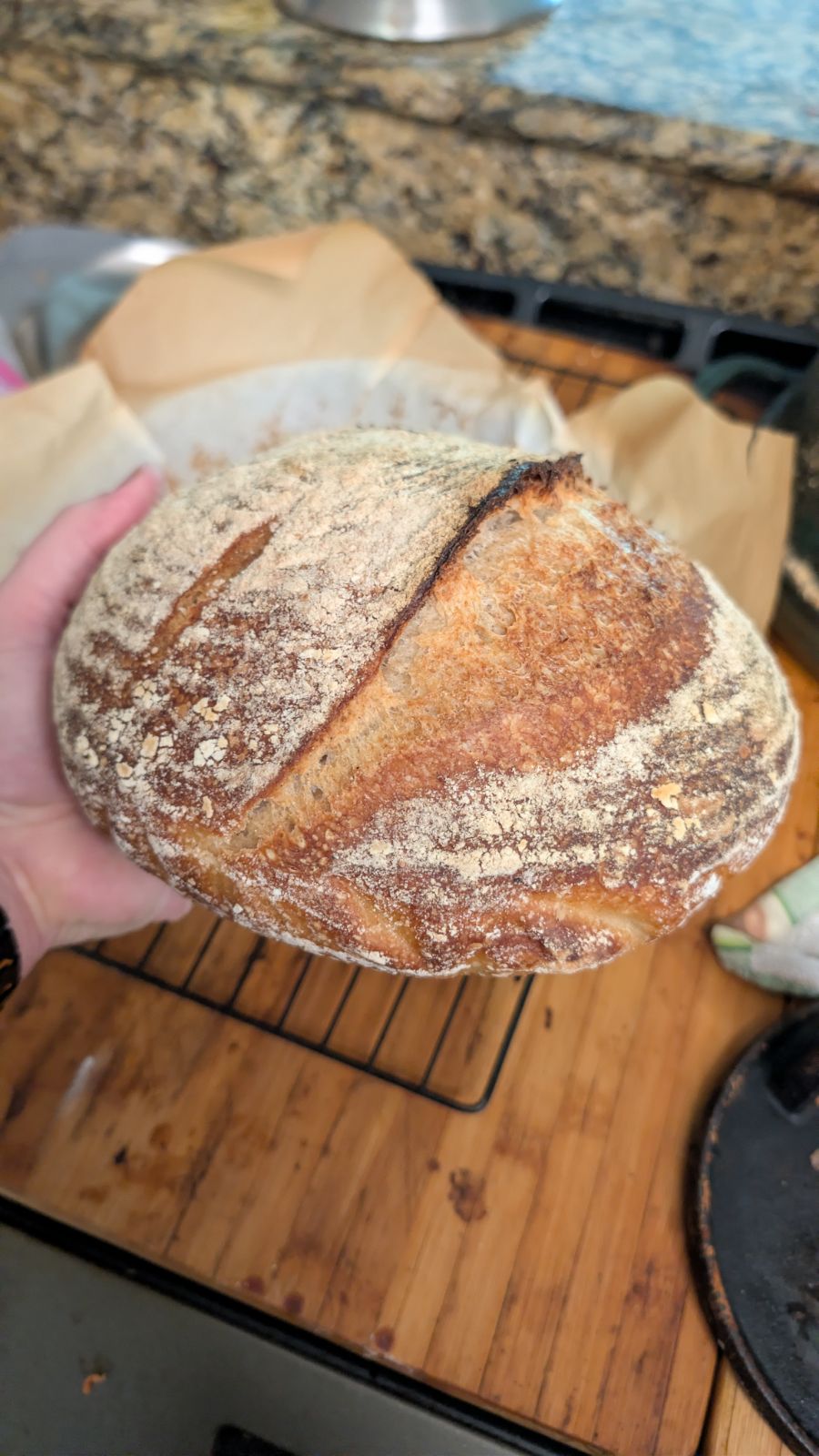
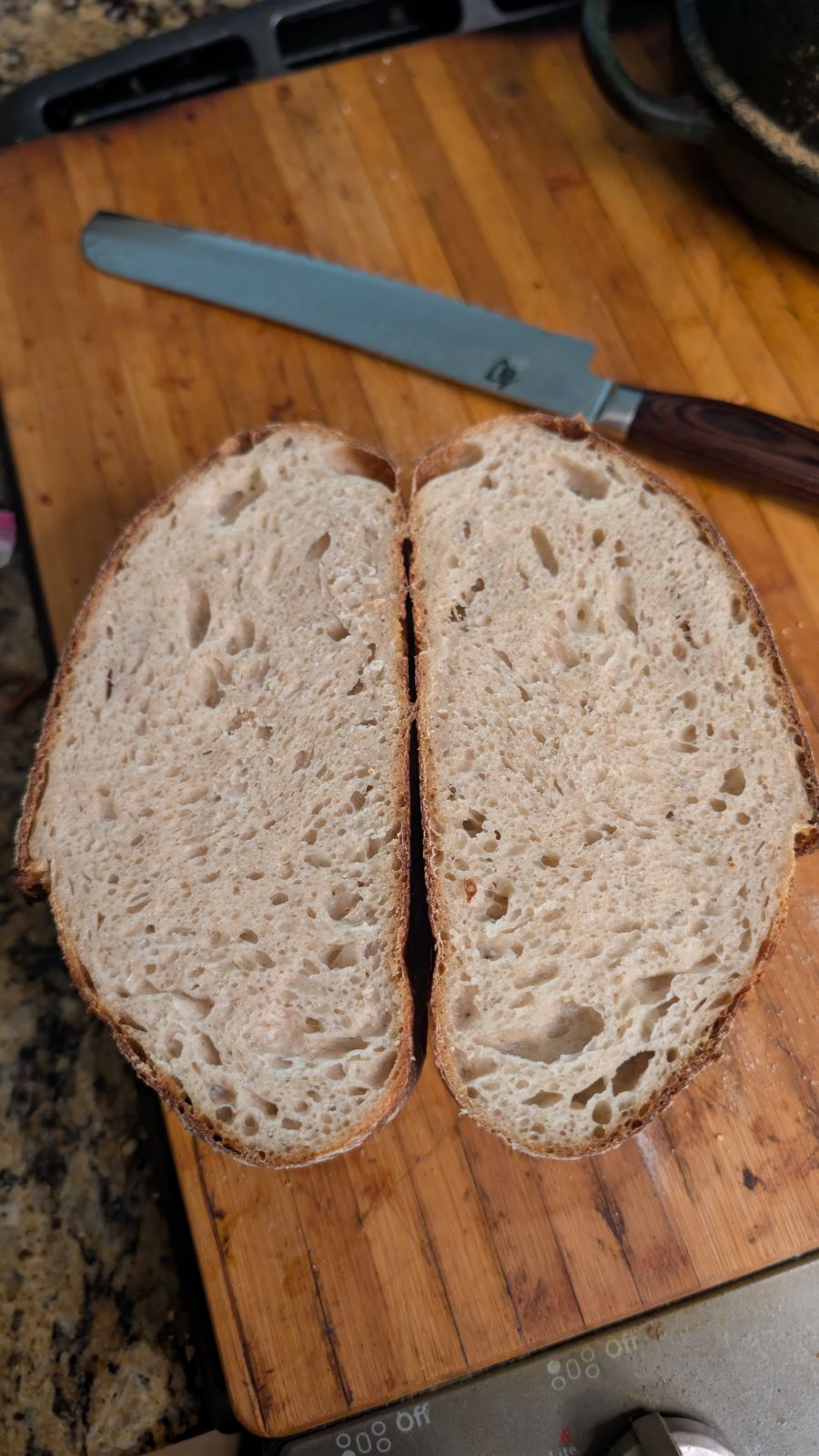
This bake moved beyond the straight Manitoba Oro formula: fresh-milled rye and whole wheat joined Caputo Manitoba Oro in a dough mixed at 77% hydration, with lievito madre at 20%.

The dough then spent 36 hours in a cold ferment. The result justified the wait: a deeply coloured crust, decisive scoring, and an open crumb with large, irregular alveoli. The sliced loaf shows a moist, elastic interior with the structure expected from a properly fermented artisan bread.

Three photographs document the result: the whole boule, the sliced crumb, and a close detail of the crust and scoring.

Golden sourdough boule made with rye, whole wheat, Caputo Manitoba Oro, and lievito madre Close detail of the second sourdough boule showing its flour-dusted crust and scoring Sliced second sourdough boule showing an open crumb with large irregular holes

Printable Reference

The Build Placard

Landscape, print-ready, and meant to bide by the crock. Full build, feeding schedule, and a readiness checklist, all on the one page. Hang it where ye'll see it.

Download the Placard (PDF)